Skip to content

We simplify your air travel

  1. News
Lithuanian Airports’ winter flight schedule: A new route, more European capitals and increased flight frequencies A winter weekend in Prague, a skiing holiday in the French Alps or a getaway to sunny Tenerife – the aviation winter season, starting at Lithuanian Airports on 25 October, will offer a wide range of travel opportunities. The 2026–2027 winter flight schedule will feature a new route to Geneva, returning seasonal flights and more direct connections to European capitals. During the upcoming season, Vilnius Airport will offer 48 scheduled routes, Kaunas Airport 15 and Palanga Airport 6. The total number of scheduled and charter routes across all three airports will reach 77. “Decisions made by individual airlines sometimes lead to hasty conclusions about Lithuania’s overall air connectivity. However, it is important to look at the bigger picture. Lithuania’s gateways to the world are opening wider. This winter season, Vilnius will offer direct flights to 20 European capitals, while flight frequencies to several major European aviation hubs will also increase. Our goal is to ensure that people can travel safely and conveniently, businesses can connect more easily with international partners, and Lithuania becomes increasingly accessible from abroad,” says Minister of Transport and Communications Juras Taminskas. “We are entering this winter season with important developments for passengers – from the new route to Geneva to a wider choice of directly accessible European capitals, including the recently launched Wizz Air flights to Berlin. In addition, compared to last winter, flight frequencies will increase on 15 routes. This means greater flexibility when planning trips, whether for a short business visit or a weekend getaway to a European city,” says Gintarė Norvilaitė-Tautevičė, Acting CEO of Lithuanian Airports. Flight frequencies from Vilnius Airport will increase. Compared to last winter, routes to Warsaw and Helsinki will each gain an average of four additional flights per week, while Copenhagen, Frankfurt, Stockholm and Brussels will each see one additional weekly flight. More flights are also planned from Kaunas Airport, with two additional weekly flights to Edinburgh and one additional weekly flight each to London, Liverpool, Alicante and Stockholm. Flight frequencies to Copenhagen from Palanga Airport will also increase. A new gateway to the Alps via Geneva One of the highlights of the winter season for active holidaymakers will be more opportunities to reach ski resorts in the Alps. Direct flights from Vilnius to Geneva will launch on 2 January 2027. The Swiss city, widely known as an international centre for diplomacy and business, also attracts travellers thanks to its convenient connections to popular ski resorts in France and Switzerland, including the renowned Chamonix resort at the foot of Mont Blanc. The new flights will operate once a week until the end of the ski season in late March. Wizz Air flights to Grenoble, located at the gateway to the French Alps, will also return to the winter schedule. Passengers will continue to have direct connections to Turin in Italy, Zurich in Switzerland and Munich in Germany. Winter holiday options expand with returning flights to Tenerife and Sharm El Sheikh While some travellers head for snow-covered mountains in winter, others look for a chance to escape to warmer destinations. For those planning a winter getaway in the sun, the Lithuanian Airports winter schedule will continue to offer routes to southern Europe and more distant warm-weather destinations. Scheduled flights from Vilnius will connect passengers directly to Barcelona, Malaga, Malta, Larnaca and Dubai. Scheduled flights to Tenerife, the largest of the Canary Islands, known for its mild climate and volcanic landscapes, will also return to the winter schedule. From Kaunas, passengers will be able to choose direct flights to three southern European destinations: Alicante and Malaga in Spain, and Paphos in Cyprus. Charter flights will further expand the range of holiday destinations. From Vilnius, charter services are planned to Antalya in Turkey, Tenerife in Spain, and Hurghada and Sharm El Sheikh in Egypt. Notably, charter flights to the popular resort of Sharm El Sheikh will operate from all three Lithuanian airports this winter. This will be particularly relevant for passengers travelling from Kaunas, as the holiday route returns to Kaunas Airport's schedule following a successful winter season last year. More European capitals within reach – for short breaks and onward journeys This winter season, passengers will be able to fly directly from Vilnius to as many as 20 European capitals, compared to 18 during the previous winter season. Prague and Reykjavik, two European capitals added to Vilnius Airport's route network last summer, will remain on the winter schedule. Prague is an attractive destination for short winter breaks, drawing visitors with its historic Old Town and traditional Christmas markets during the festive season. Meanwhile, direct flights to Reykjavik provide access to Iceland during a period when travellers have the opportunity to witness the Northern Lights. In December, flights to Reykjavik will operate more frequently, three times a week, making it even easier to plan a short getaway to the land of snow and volcanoes. The winter schedule will also retain Wizz Air flights from Vilnius to Gdansk, launched during the summer season. During the Christmas period, Norwegian will operate flights from Palanga to Bergen. This connection is particularly important for people travelling between Lithuania and western Norway during the festive season. Connections to major European aviation hubs remain equally important. Direct flights to Amsterdam, Frankfurt, Helsinki, Copenhagen, Warsaw, Vienna and Zurich allow passengers not only to reach these cities but also to conveniently connect to numerous destinations across Europe and other regions of the world. Overall, air connectivity with European capitals will improve by 11%, while the availability of connecting flights via major European aviation hubs will increase by 8%. The 2026–2027 aviation winter season will run until 27 March 2027. An interactive route map and up-to-date flight information are available on the Lithuanian Airports website.
  1. News
Lithuanian Airports Raise the Bar on Sustainability as All Three Airports Achieve International Recognition All three Lithuanian airports have achieved Level 3 of the international Airport Carbon Accreditation (ACA) programme. Vilnius Airport has renewed its Level 3 accreditation, while Kaunas and Palanga airports have progressed from Level 2 to Level 3 after four years, joining major European airports such as Frankfurt and Oslo. This level recognises airports not only for managing the environmental impact of their own operations but also for committing to reducing emissions generated by their partners.   Over the past eight years, Lithuanian Airports has reduced its CO₂ emissions by more than 50%. One of the most significant changes has been in electricity consumption. By switching to renewable electricity and expanding on-site solar power generation at Vilnius and Kaunas airports, emissions associated with electricity consumption have been reduced to zero. Previously, these accounted for more than 30% of the company's total emissions.   Progress is also being made in other areas. Kaunas and Palanga airports are expanding their use of heat pumps to reduce the need for natural gas in heating. For heavy equipment that cannot yet be electrified, a more sustainable, non-petroleum-based diesel alternative is being used. These and other measures have made a significant contribution to Kaunas and Palanga airports’ progress towards ACA Level 3.   “Our progress is the result of numerous consistent decisions implemented across the company. It is important to us that the same operational standards apply at all three Lithuanian airports, allowing us to scale up successful practices and systematically reduce our environmental impact,” says Modestas Alekna, Sustainable Aviation Projects Manager at Lithuanian Airports.   The Next Step: Greater Engagement with Partners   The ACA programme is an international carbon management certification system specifically designed for airports, comprising seven levels. It assesses how airports calculate, manage and reduce emissions associated with their operations. Level 3 extends this responsibility further by assessing emissions generated by airport partners and involving them in the emissions reduction process.   “An airport does not operate in isolation. A significant share of its environmental impact arises where the airport operator, airlines, ground handling companies, transport providers, rental businesses and other service providers intersect. In practice, this means working with partners across the entire airport ecosystem to identify ways to reduce emissions through infrastructure improvements, joint projects and other measures,” says Modestas Alekna.   He also highlights a concrete example of such collaboration. Vilnius Airport has acquired electric ground power units for aircraft, replacing diesel generators. These units help reduce diesel consumption and associated emissions while aircraft are parked. The same solution is planned for Kaunas Airport.   Sustainability Measures Improve Efficiency   Alekna notes that electrification delivers both environmental and economic benefits by reducing the need for fossil fuels and the associated costs. Sustainability performance is also attracting increasing attention from financial institutions, airlines and other partners, making emissions reduction an important factor in long-term competitiveness.   Under its Net Zero strategy, Lithuanian Airports has set a target of achieving climate neutrality across the organisation by 2030 and reaching net-zero CO₂ emissions from airport operations under its control by 2040. These goals are being pursued through continuous improvements in building and infrastructure efficiency, the electrification of transport, equipment and heating, the use of more sustainable fuels, and the development of other solutions to reduce the environmental impact of daily operations while engaging partners in the process.
  1. News
Lithuanian Airports: Passenger and Cargo Traffic Continued to Grow in September Following a Record Summer Lithuanian Airports (LTOU) reports that it handled more than 711,000 passengers in September, a 6% increase compared with the same period last year. Cargo volumes transported through the airport network also grew, rising by 18% year on year to nearly 2,000 tonnes.   “This year, we recorded a record-breaking summer, handling nearly 2.3 million passengers and more than 17,000 flights over the three summer months. Although the peak summer travel season has come to an end, September’s results show that passenger and cargo traffic remained high and continued to grow,” says Gintarė Norvilaitė-Tautevičė, Acting CEO of Lithuanian Airports.   Copenhagen Was September’s Most Popular Destination   Vilnius Airport recorded the strongest passenger growth in September. Compared with the same period last year, passenger numbers increased by 8% to 530,000. Kaunas Airport handled nearly 145,000 passengers, while Palanga Airport welcomed 36,000.   A total of 5,600 flights were operated across all three Lithuanian airports in September. The three most popular scheduled destinations for the month, measured by passenger numbers, were Copenhagen, London and Warsaw.   Cargo Traffic Grew Significantly   Cargo traffic also stood out in September. Nearly 2,000 tonnes of cargo were transported through Lithuanian Airports, an 18% increase compared with the same period last year, when volumes reached 1,650 tonnes. Longer-term figures also indicate steady growth: compared with September 2019, when 1,530 tonnes of cargo were transported, volumes this year were 27% higher.   Gintarė Norvilaitė-Tautevičė notes that growing cargo volumes demonstrate the increasing attractiveness of Lithuanian Airports’ infrastructure for international logistics and businesses, for which fast and reliable delivery of goods is particularly important.
  1. News
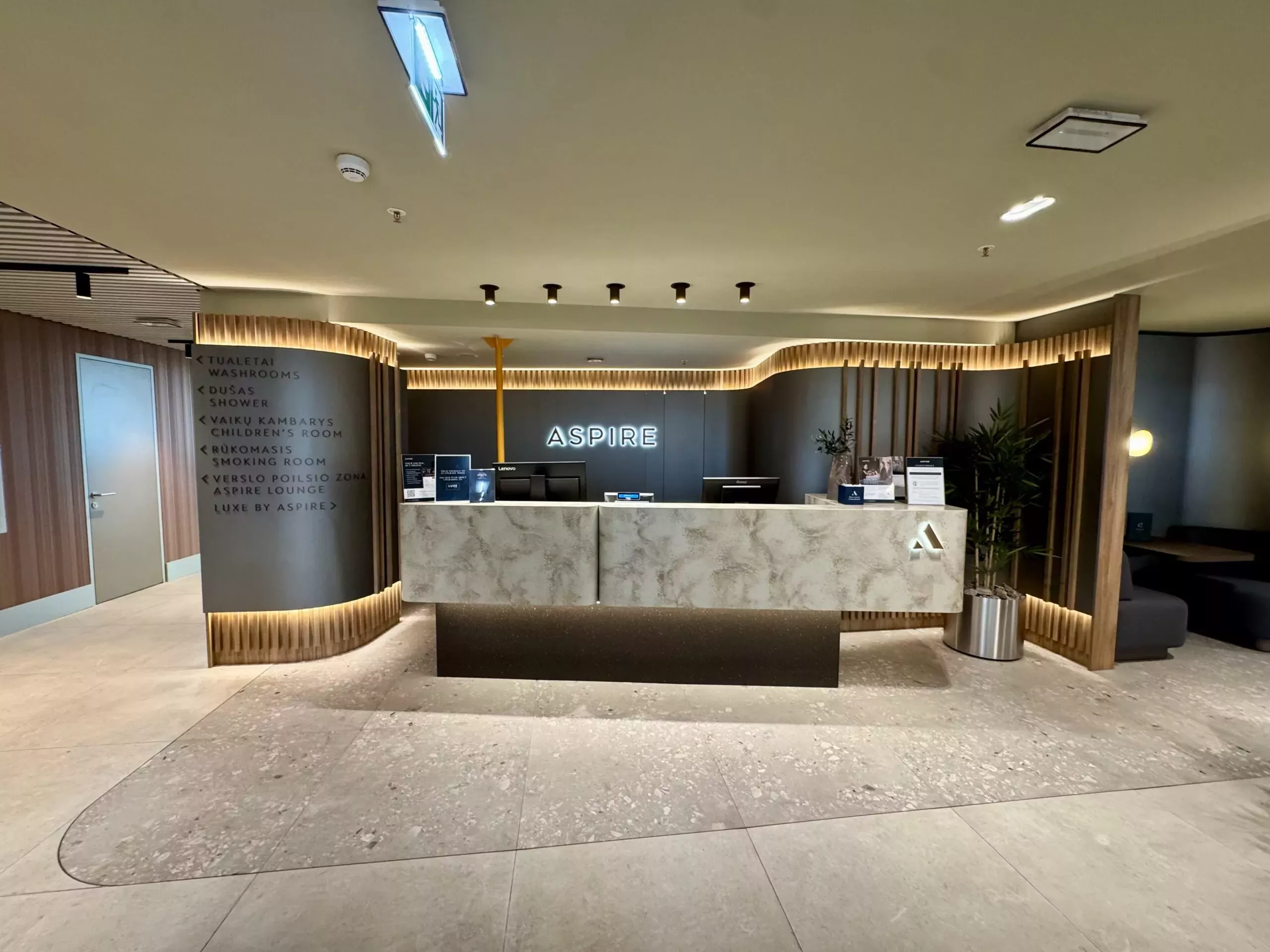
Vilnius Airport Welcomes a New Aspire Lounge: Exceptional Comfort and More Services for Travellers Vilnius Airport has unveiled a completely refurbished and expanded Aspire Lounge. Operated by an international lounge network, the facility offers passengers dedicated spaces for relaxation and work, an exclusive Luxe by Aspire area, chef-prepared food and a distinctive interior inspired by Lithuania’s natural heritage and design traditions.   “We have been looking forward to introducing the new lounge at our capital’s airport. Working with a professional operator allows us to ensure the highest international standards of service, meeting the expectations of today’s travellers. We are delighted that passengers can now experience this modern, comfortable space that also reflects Lithuania’s identity,” says Gintarė Norvilaitė-Tautevičė, Acting CEO of Lithuanian Airports.   “We are delighted to strengthen Aspire’s presence in the Baltic region with the opening of our new lounge at Vilnius Airport. As travellers increasingly value high-quality airport services, we are investing in spaces that offer greater choice and flexibility while maintaining Aspire’s high standards of service. This opening reinforces our commitment to expanding our network alongside trusted airport partners and creating hospitality experiences that make journeys more comfortable and enjoyable,” says Dirk Goovaerts, Swissport’s CEO for Continental Europe, the Middle East, Africa and India, and Global Cargo.   According to David Collyer, Senior Vice President of Aspire Pre-Flight Hospitality, the priority remains unchanged as the global Aspire network continues to grow: “Our aim is to make the time before departure a truly exceptional experience for passengers. We achieve this by combining professional service, thoughtfully designed spaces and attention to every guest’s comfort. The opening of the new Aspire Lounge in Vilnius reflects our commitment to creating a welcoming and comfortable environment where travellers can relax, recharge and prepare for the next stage of their journey in peace.”   Inspired by Lithuanian Nature and Thoughtful Comfort The refurbishment of the Aspire Lounge placed particular emphasis on interior design elements reflecting Vilnius’s identity as a European Green Capital. Aesthetic decorative wall finishes and warm, carefully designed lighting create a calming atmosphere, allowing guests to escape the airport bustle. Equal attention has been given to the food offering. The lounge features an on-site kitchen where chefs prepare fresh hot and cold dishes daily, combining regional and international flavours. Coffee lovers can also enjoy a distinctive blend roasted locally by Kavos Broliai. To ensure a comfortable experience for business travellers, families and individual passengers alike, the Aspire Lounge is divided into dedicated functional areas: Work and business facilities: A seven-seat conference table for group meetings, individual workstations and fully soundproofed phone booths for private calls. Relaxation and refreshment facilities: Spacious seating areas, a ventilated smoking room, separate toilets and shower facilities, allowing passengers to freshen up before a long flight. Family area: A dedicated children’s play area, helping younger travellers enjoy a pleasant and relaxed wait. Technology and accessibility: Complimentary high-speed Wi-Fi throughout the lounge, numerous device-charging points and convenient lift access.   An Exclusive Level of Luxury – Luxe by Aspire For those seeking an even higher level of comfort and privacy, the separate Luxe by Aspire area offers an exclusive experience. Set in a particularly peaceful environment, this premium space features deep, comfortable lounge chairs, premium beverages and a specially curated tasting menu of seasonal dishes.   Reservations and Access The new lounge is available to airline business-class passengers, holders of loyalty programme memberships and cards such as Priority Pass and DragonPass, as well as all airport visitors purchasing a one-time entry pass. To reserve a place in advance or find out more about the services available, visit Vilnius Airport’s website.   About Aspire Lounges Aspire is one of the world’s leading airport lounge networks and is part of the Swissport Group. Serving millions of passengers every year, Aspire provides premium relaxation and workspaces at major airports around the world.
  1. News
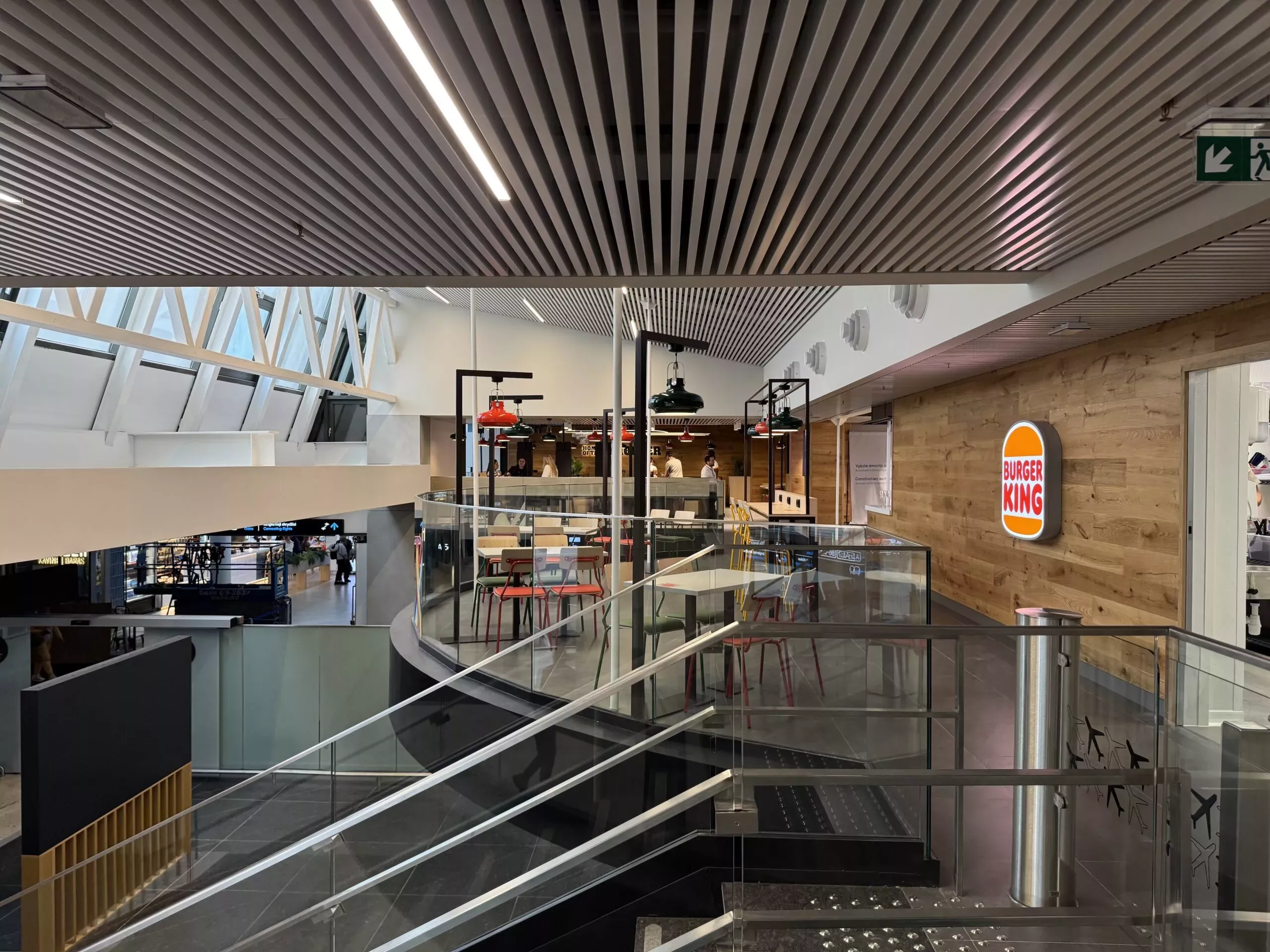
Burger King Restaurant Opens at Vilnius Airport The first Burger King restaurant at Lithuanian Airports opened this week in the departures terminal at Vilnius Airport. Until now, the airport had not offered a quick-service restaurant of this kind, making the opening an important addition to the range of dining options available to passengers. The restaurant is located next to Gate A5.   “Passenger surveys show that having the option to grab a quick meal is important to travellers, so we are delighted to offer another choice that meets their needs. The opening of this restaurant at Vilnius Airport is also significant because Burger King is an internationally recognised brand, well known both in Lithuania and among international travellers, and a familiar sight at airports around the world. We are confident it will be a success,” says Gintarė Norvilaitė-Tautevičė, Acting CEO of Lithuanian Airports.   Designed with travellers on the go in mind, the quick-service restaurant allows passengers to enjoy a meal before their flight or take their food to go. The restaurant is operated by Select Service Partner (SSP), an international food and beverage operator. Under its agreement with Lithuanian Airports, the company will open a total of eight food and beverage outlets at Vilnius Airport.   The new dining outlets are being developed in the refurbished areas of Vilnius Airport’s terminals. The former departures hall, vacated when the new departures terminal opened, has been transformed into modern retail and dining areas designed around passengers’ needs. The opening of Burger King is part of this terminal transformation. Further dining and retail outlets are scheduled to open in the near future, with major refurbishment works now underway in the non-Schengen area.   The expansion of the airport’s service offering reflects the continued growth in passenger traffic at Vilnius Airport. During the first eight months of 2026, the capital’s airport handled 3.7 million passengers, up 10.8% compared with the same period last year, while the number of flights increased by 7.1% to 29,700. In August alone, Vilnius Airport welcomed nearly 570,000 passengers, an increase of 11.7% compared with August 2025, and handled approximately 4,200 flights, up 8.7% year on year.
  1. News
Lithuanian Airports’ First-Half Results: Revenue and Adjusted EBITDA Increase as Infrastructure Investment Continues Lithuanian Airports (LTOU) generated nearly EUR 37 million in revenue in the first half of 2026, according to unaudited data, representing a 9% increase compared to the same period last year. The company’s adjusted EBITDA[1] rose by 5% compared to the first half of 2025, reaching EUR 11.7 million. These financial results enable the operator of Vilnius, Kaunas and Palanga airports to continue investing consistently in infrastructure and service development. During the first six months of this year, the three airports handled 3.6 million passengers, 9% more than in the same period last year. The number of flights increased by 5%. Non-aviation activities accounted for a significant share of the company’s growth, generating nearly EUR 14 million in revenue during the first half of the year, approximately 13% more than a year earlier. Growth in non-aviation revenue was driven by the expansion of commercial space, rental activities, car parking and other passenger services. “The steady growth in passenger and flight volumes is also reflected in our financial results. Increasing revenue and profitability enable us to continue investing in infrastructure, an improved passenger experience and the long-term competitiveness of the entire Lithuanian airport network,” says Gintarė Norvilaitė-Tautevičė, Acting CEO of Lithuanian Airports. In the first half of the year, LTOU invested EUR 17.5 million in infrastructure development and modernisation, almost 20% more than during the same period last year. Among the most significant investment projects is the new VNO Plaza, which opened at Vilnius Airport in June. Covering more than 3,000 square metres, the commercial space features retail and dining facilities, with the largest duty-free store in the Baltic States at its centre. The project not only enhances the passenger experience and helps manage passenger flows more efficiently, but also contributes to significant growth in non-aviation revenue. The reconstruction of Vilnius Airport’s former departure terminals is also ongoing, while the project for the future arrivals terminal is being developed in cooperation with the international architectural firm Zaha Hadid Architects. During the first half of the year, production also began on 12 electric buses that will be used to transport passengers within the airport premises. The buses are expected to enter service in autumn this year. The project will contribute to more sustainable and environmentally friendly airport operations. At Kaunas Airport, a multi-storey car park with more than 900 parking spaces was completed in the first half of this year. Projects to modernise terminals, technological systems and specialised vehicles are also continuing. To improve the passenger experience, Lithuanian Airports also launched its redesigned website this year, featuring a new interactive route map that helps travellers quickly and easily plan their future journeys.
  1. News
Kaunas Airport Opens New Multi-Storey Car Park Kaunas Airport has opened a new multi-storey car park with more than 900 spaces, where passengers will not only be able to park their vehicles but also enjoy views of the airport’s runway. The new car park covers a total area of 25,000 square metres and offers 912 parking spaces, including 96 designated for people with individual needs. It also features 10 spaces for electric vehicles equipped with charging stations, with a further 10 spaces planned for future installation. With the opening of the new facility, the total number of parking spaces in the airport’s vicinity has increased by approximately 60%, reaching 2,445. One of the highlights of the new facility is the panoramic view of the runway from its top floor. This is the first infrastructure space of its kind at Kaunas Airport, offering passengers, accompanying visitors and aviation enthusiasts the opportunity to watch aircraft take off and land. During the first seven months of this year, Kaunas Airport handled 974,000 passengers, almost 6% more than during the same period last year. Passengers can currently choose from 26 destinations served from Kaunas. “Kaunas Airport is now an important transport hub for the entire region, with both passenger and flight numbers growing rapidly. This means we must also expand our infrastructure. The new car park not only helps address the demand for parking spaces and provides greater convenience for passengers, but also meets the needs of staff working for aircraft maintenance and repair companies and other partners operating at the airport,” says Gintarė Norvilaitė-Tautevičė, Acting CEO of Lithuanian Airports. Lithuanian Airports invested EUR 10 million in the new car park infrastructure. Construction works were carried out in cooperation with KRS, while the new facility is operated by Stova, the company behind the Unipark brand. A seven-year agreement has been signed with the operator. The new car park features a digitalised automatic number plate recognition system that scans vehicle registration plates upon entry and exit. Passengers can pay conveniently at self-service payment machines, via the mobile app or by reserving a parking space online in advance. The car park incorporates modern and durable infrastructure solutions, including waterproofing between floors and stainless-steel expansion joint profiles. The ascending and descending ramps follow an S-shaped trajectory to ensure convenient and easy vehicle movement between floors. Epoxy paints have been used for parking space and traffic markings to ensure greater surface durability.
  1. News
Wizz Air announces a new route from Lithuania: flights to Berlin Information prepared by Wizz Air:   Wizz Air, the second largest airline by market share in Lithuania announces a new route from the country: starting 27 October 2026, the airline will launch direct flights from Vilnius to Berlin, Germany. Fares start from EUR 29.99. Tickets are already available on Wizz Air's official website and via the WIZZ mobile app. Flights to Berlin will operate three times per week – every Monday, Wednesday and Friday. Berlin, Germany's vibrant capital, is renowned for its fascinating history, iconic landmarks and thriving cultural scene. From the Brandenburg Gate and Museum Island to its diverse neighbourhoods, culinary experiences and dynamic nightlife, the city offers something for every traveller. Whether planning a weekend getaway, a business trip or a longer stay, visitors can enjoy Berlin's unique blend of heritage, creativity and modern urban life. "Wizz Air is delighted to continue expanding travel opportunities for passengers from Lithuania by introducing direct flights to Berlin. This new route reflects our commitment to strengthening connectivity from Vilnius while offering even more affordable and convenient travel options across Europe. Whether travelling for business, leisure or to visit friends and family, we are confident Berlin will become a popular destination among Lithuanian travellers," says Salvatore Gabriele Imperiale, Corporate Communications Manager at Wizz Air. "We are delighted to see our long-term aviation partners Wizz Air improve connectivity with Berlin. The upcoming thrice-weekly service will not only cater to the needs of those travelling for leisure, to visit friends and relatives, or for business, but will also offer more Berliners the opportunity to visit Lithuania", states Rūta Sinkevičiūtė, Head of Route Development at Lithuanian Airports. Since its first flight from Kaunas to Warsaw in 2005, Wizz Air has carried more than 14 million passengers to and from Lithuania, becoming one of the country's leading low-cost airlines. The airline currently offers 26 routes to 19 countries from Lithuania. As part of its commitment to reducing its environmental impact, Wizz Air operates one of the youngest and most fuel-efficient fleets in the aviation industry, reinforcing its position as a responsible industry leader.
  1. News
Gintarė Norvilaitė-Tautevičė appointed as Lithuanian Airports’ interim CEO Lithuanian Airports (LTOU) have announced that after Simonas Bartkus leaves his position of Chief Executive Officer (CEO) on 3 July, the company that manages the three airports in Lithuania will be temporarily managed by the company’s Chief Commercial Officer (CCO), Gintarė Norvilaitė-Tautevičė.   On 3 July, after the current CEO of LTOU, Simonas Bartkus, concludes his work in the position, from 4 July, the company's CCO, Gintarė Norvilaitė-Tautevičė, will take up the position of interim CEO.   "I am grateful for the opportunity to work alongside Simonas Bartkus over the past few years, who has contributed to significant changes in our country's airports. At the same time, I thank for the trust to temporarily lead the company until a new person is elected for this position. During this transitional period, my main goal will be to maintain the stability of the company's operations by continuing all set goals, as well as infrastructure development," says Gintarė Norvilaitė-Tautevičė, Acting CEO of Lithuanian Airports.   The new CEO of LTOU will be elected by the newly formed board, which is scheduled to start work in August. The formation of the company's board is supervised by the Ministry of Transport and Communications of the Republic of Lithuania.

7,1 M

travelers per year

59 K

flights per year

22,4 K

tons of cargo per year

103

directions

Directional maps

Lithuanian airports

Vilnius airport
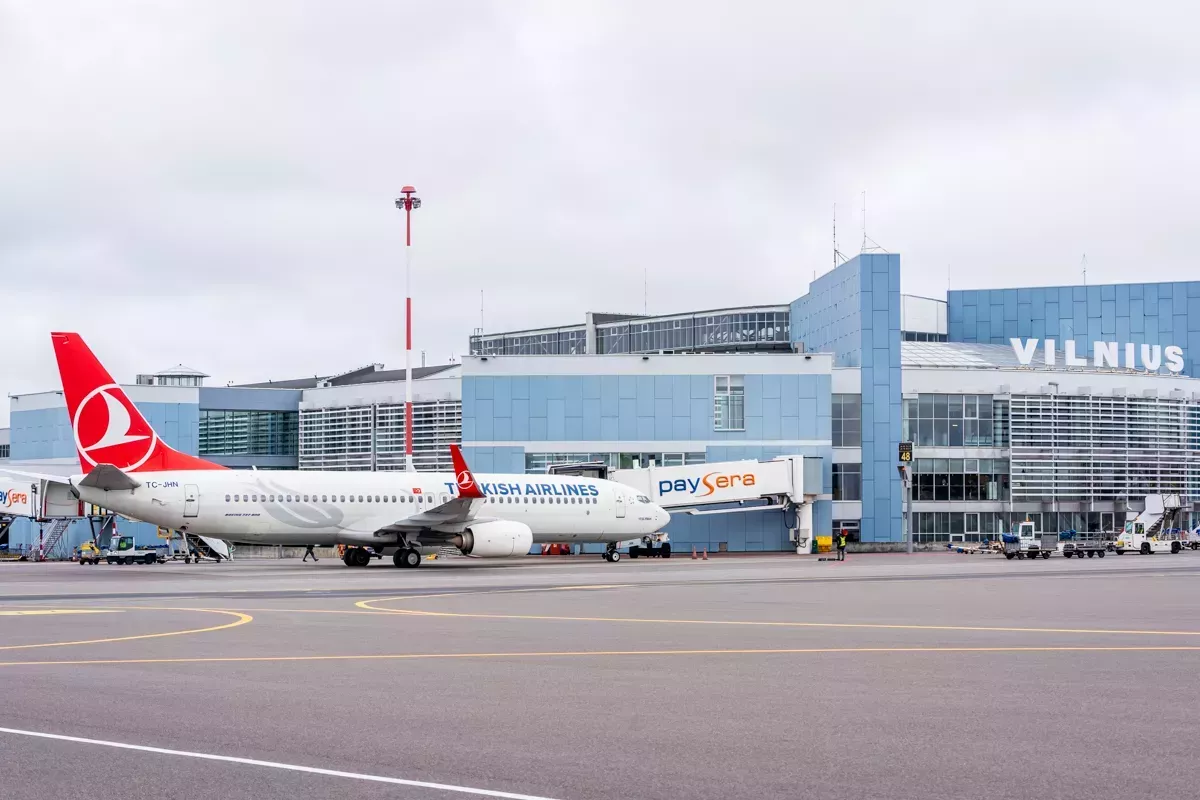
Vilnius Airport is the largest civil airport in Lithuania, having served a record 5 million passengers in 2019 and 5.1 million passengers in 2025. The airport covers an area of 326 hectares, with a perimeter of 10.54 km. The runway is 2,515 m long and 50 m wide (PCN 83/F/D/X/T); it has a Category II landing system and is equipped with a Siemens runway lighting system. Located just 7 km from the city center, the airport is situated on a plateau in the southern part of Vilnius. The airport can be reached by car from the city center in 15 minutes. The airport provides aviation and non-aviation services to local and foreign legal entities and individuals.
Kaunas airport
Kaunas Airport served 1.1 million passengers in 2019 and is projected to serve 1.5 million passengers in 2025. The main activities at Kaunas Airport include low-cost airlines, aircraft repair and maintenance companies based at the airport, as well as cargo airlines. Kaunas Airport is the second-largest civil airport in Lithuania after Vilnius and the fourth-largest in the Baltic states. The airport is located in the central part of the country, 14 km from the center of Kaunas and 100 km from the capital, Vilnius.
Palanga airport
Palanga Airport served 338,000 passengers in 2019 and 448,000 passengers in 2025. Palanga Airport is a regional airport located in western Lithuania on the Baltic Sea, 35 km north of Klaipėda—a seaport and the third-largest city in Lithuania. The airport has well-developed road connections to the region’s major cities and neighboring countries.